4 Tb Pcie-based Ssd For Mac Pro
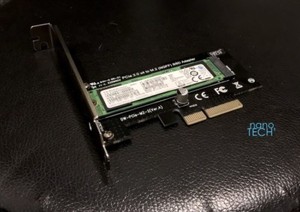
Hello guys: Qucik Quesion, I have this 2013 New Mac Pro, and I am wondering, is the SSD inside are same in the MBP or MBA? I have this quesion because I want to buy SAMSUNG MZ-JPU512T/0A2 SSD, some page on eBay says it's available for New Mac Pro, a nd it did looks like the same type of SSD in my Mac Pro. So I just want to ask that if it is ok for me to buy SAMSUNG MZ-JPU512T/0A2 SSD. Dec 4, 2014 - Which Storage is best for Mac Pro SSD HDD or Flash. Add to this TRIM, RAID configurations and PCI-E slot based storage. You could, for example, marry a 512GB flash storage blade with a 4TB WD Black HDD for.
Apple's new Mac Pro has some Mac users buzzing: the tiny machine appears to be crazy fast, and it's a total redesign of the system - replacing the giant aluminum box of yore with a tiny little black cylinder. But should you replace your Mac Pro with the new one? If you want to get as much bang for your buck, upgrade your aluminum Mac Pro with an Solid State Drive (SSD).
There are different options available for Mac Pro-compatible SSDs, and we're going to look at two of them here: a SATA-based SSD and a PCIe-based SSD. The bottom line is that you're going to see a huge increase in speed either way; it's just a question of what your budget will allow. To give you some sense of how significant the difference in speed is, I've borrowed a couple of different products from (OWC).
One is a SATA-based SSD - the, the other is closer to what the new Mac Pro has - it's a PCIe card with SSDs on it, OWC's. Both the SATA SSD and the PCIe card have 240 gigabyte capacities, which were pretty comparable to the original 320GB 3.5-inch hard drive that came with this Mac Pro. All of them are running fresh copies of Mountain Lion 10.8.4, with up to date security patches. Making the most of what you have Obviously the older Mac Pro won't be as fast as the new one, but don't think that your aluminum monolith is completely useless.
SSDs have come down in price quite a bit, and if you shop around it's now possible to pick one up (albeit with limited storage capacity) for under $100. While SSDs cost a lot more per gigabyte than hard disk drives, the difference in speed is amazing. Your Mac Pro will be faster to boot, it will launch applications faster, and it will read and write data faster. How much faster? That depends on which option you choose: SATA or PCI Express (PCIe).
Serial ATA, or SATA, is the backbone of the aluminum Mac Pro's local data storage interface. Inside your Mac Pro are four SATA bays, each of which can accommodate a 3.5-inch hard disk drive. SATA is also used to connect the internal optical drive (or drives) your Mac Pro comes with. What makes the SATA bays particularly easy to work with is the Mac Pro's 'sled' design - each drive mechanism is mounted on a tray that easily slides out and slides back in, locking the drive into place without needing to manually connect any ribbon cables. It's quick, it's easy and it's trademark Apple elegant, even within the brutalist architecture of the Mac Pro.
The various Mac Pros that have come out over the years differ in speed, interfaces and basic construction, but they all share common features. The internal drive bays are one of those features that's remained a constant through the Mac Pro's evolution, so regardless of which model of Mac Pro you use, it's going to be pretty similar. Apple's made it very easy to get access to those drive bays, and to put in (and remove) drives. To get inside your Mac Pro, you just lift a lever on the back of the box, then slide out the side panel. The only tool you'll need is a Philips head screwdriver. The screwdriver is used to actually mate the drive to the tray to hold it in place. But you don't need your own screws - they're built into the sled.
The screws match up with mounting holes that are already pre-drilled onto all 3.5-inch hard disk mechanisms. SATA SSDs are, by and large, designed with a 2.5-inch hard drive in mind, because that's what's used in most laptops - and laptops are very popular. Mounting a 2.5-inch SSD into a 3.5-inch hard drive sled isn't tricky - you just need a simple to get the job done. OWC also offers a replacement that does the job, if you're using a 2009-era or later Mac Pro. Once you've got the drive in, it's a simple matter of booting up the Mac and running Disk Utility in the Utilities folder. Create a partition map to your liking just like you would a hard drive and you're in business.
SATA is terrific because it's easy to work with and it's ubiquitous, so there are a lot of products - both hard drives and SSDs - designed to use it. But it has its limitations.
One of them is its bandwidth. The SATA interface on the Mac Pro has a top transfer speed of 3 gigabits per second.
But there's another option if you're interested in maximum performance: go straight to PCI Express (PCIe). PCIe is the expansion card interface on the Mac Pro, the one you use for graphics cards and whatever other expansion cards you want to install. Menu bar app mac watch folders for google photos. And there's a lot more bandwidth to work with - 10 gigabits per second. By going PCIe, you're going to more closely align your Mac Pro with Apple's new black, cylindrical Mac Pro. It uses the same connection, eschewing SATA for a direct PCIe link. The same goes for the new Haswell-equipped MacBook Airs that shipped earlier this year. Installing a PCIe card in the Mac Pro is, in some ways, easier even than a SATA drive.